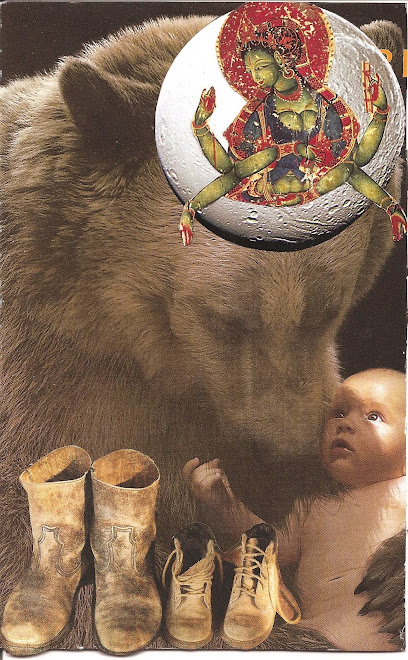
Old Enough For Fairy Tales Again

Old Enough For Fairy Tales Again
Showing posts with label writing. Show all posts

Thursday, January 28, 2010

Il était une fois - There Was A Time

My mother never read me stories. But that does not mean she didn't tell me fairy tales. Raised in a French convent school in Istanbul, my mother read literature and religious books, studied science and math. She debated theology and metaphysics with the Jesuits that taught these classes. But I do not think the Brother's Grimm, Hans Christian Anderson, Charles Perrault, or Andrew Lang were part of her curriculum, Still stories are in our blood, or so I believe (hers, mine, and all of ours), and fairy tales especially.

My mother never read me stories, yet that doesn't mean she didn't tell tales. Her every recounting of the past took on a storied air. Maybe it was the difference of language; she spoke fluent English, but it wasn't her first language or her second. Maybe it was something in her rhythms or her blood. I do know there were few tales she was willing to tell and so those were repeated over and over until they gained through knowledge and anticipation an aura of familiarity and something else, something more, maybe portent? She never said we were the same, that her stories would be mine, but I wonder if beneath these oft told tales was the implication of just that.

My mother's stories were nearly always about her. I do not even know the story of my own birth, nor have I asked, but I do know the story of hers. By the time I learned to read at three, I told my own tales, the need so great for narratives that I gave them to myself, found them the best and only way I could, and recounted them with themes and variations each and every day.

When my mother did tell stories they were often as she was putting on her make-up. I would lay on the bed, my belly pressed against the mattress, the scent of my mother's perfume surrounding me even in her sheets and bedspread. She was everywhere, embodied in flesh and assemblage, or at least her mask was. Her house has always been her persona; I may have grown up there but it was never home. She would apply her moisturizer then her foundation. There'd be eye make-up, mascara and blush. And in-between she'd tell a story, maybe about the dances she went to, her first love, her time in school, meeting my father. Her tales began the French way, although I never realized that until now. "Il etait une fois,"she would sayand it would begin, the tale would be spun and spin a world into being.
I came to think this might have been just how God made the world, in the simple act of telling Himself.

It's genius, these ritual beginnings. "There was a time," suggests there was, and is, and will be again. There's hope
in those words, that things can change, that we can love again and be loved, that we have come from somewhere
to somewhere, and have miles to go. It doesn't matter it's "once upon a time," the Turkish, "there was, and there
wasn't," we learn about the world in those tales, whether they be the established canon, or lives made magic
and mythic by a few simple words that place those lives, us, into a flow of time and beyond it. My mother
never read me books but she did tell me stories. This is what we were born to do, tell ourselves and each other
like the storytellers in the square, for money or not, mostly for the sheer love of words and tales and times past
and present and yet to come. We are each of us writers, even if we never put pen to page (or fingers to keyboard).
We write ourselves. We tell our lives with every action, every word. It is both thrilling and terrifying, but mostly
thrilling. It took me almost fifty years to figure this out and only when I was old enough to turn to fairy tales again.


Wednesday, January 27, 2010

After Happily Ever After

A child of Disney, I was raised on happily ever after. Yes, I read my Grimm's tales and Hans Christian Anderson, but it was Disney and the magic of the silver screen that etched itself deep into my psyche. Happily ever after was how those movies ended, everything resolved, Pinocchio a real boy, Cinderella and her Prince happy in the castle, probably with plenty of children and nannies to care for them, and not a spot of money trouble, erectile dysfunction, PMS, tantrums, and no one singing "Send in the Clowns."

I remember reading something by A. S. Byatt about fairy tales. Maybe it was an introduction to one of her short story collections - The Djinn in the Nightingale's Eye or The Elementals (this is when I find nearly fifty years of voracious reading frustrating. I remember the words but not exactly where to find them so they float and sink, taunt and tease, find me and grab hold and yet their source as elusive as the source of the Nile one was and perhaps as dangerous to discover)? She wrote bout the storytellers of the Middle East who sit in the square and weave tale after tale for a few coins. They never stop. One story leads into another with a connection of course, major or minor hardly matters. Perhaps this is where Scherezade and her 1001 nights of stories came from. This intrigued me for just as I have trouble believing a story can be interpreted only one way (is the pricking of the Sleeping Beauty's finger always the first menstrual blood? Must it be a story of latency emerging into sexuality or can a middle aged woman find herself sleeping her life away, dreaming a common dream, waiting expectantly to be saved by her Prince Charming, woken with a kiss?), I cannot believe we are just one tale until mastered and only then another. Maybe we are collages, lenticulars. We are certainly complex and layered. I suspect we are that Middle Eastern storyteller in the town square telling ourselves one after another for a few coins.

So when you come back old enough to fairy tales, what do you do with happily ever after? Of course if you've spent any time at all the Grimm Brothers, especially their early editions which were not softened by Victorian sensibilities of childhood innocence, you realize there is no such thing. You understand that there might be a reason Jefferson claimed as an inalienable right the pursuit of happiness, but not happiness itself. Still, you wonder, at least I do, what happened to Cinderella, to Briar Rose, to Snow White.

After I collaged about The Wolf of My Heart and wrote how she came to me, what it might mean, I found myself with the beginning of a story, a dream. I sat at my writing table and watched it play out before my eyes. I could feel it in my body. I was a woman, myself and not. I was running, bare feet and hard ground. The light of a nearly full moon penetrated the forest I found myself in, leaving a dappled trail to follow and the distant cry of a wolf. From this beginning a story emerged of Red Riding Hood at middle age and wolf call that can be many things, her own wild heart, the call of a wild love, the remembrance of a young self adventurous, hungry, ready and willing to plunge into the unknown the wild, to risk, to run, to be completely and utterly herself.

Now I was never a fan of the story Little Red Riding Hood. It never captivated me. I never had to read the myriad variations on the tale as my daughter did with Cinderella. So why this tale would come to me know was a mystery of the kind Psyche specializes in, the same force that creates synchronicity and miracles. The tale held me until I told it, all of it, the right way, the way only I could tell it. A week passed, then two, until I had it roughly in its final form.

In the thesis I wrote for my Masters in Counseling Psychology, I posited and then proved that we write ourselves, or at least I do. Even if we do not pursue memoir, even if there is nothing on the page remotely resembling our lives, we write ourselves, we spill our secrets, we perform the Dance of the Seven Veils and let every one of them fall. We stand naked before our readers and they never know how bare we are, past skin to blood and bone. The story I wrote, the one of a middle-aged Red Ridding Hood, was no different than any of the others. When I was done I realized it told my deepest secrets, shouted them to the heavens. Maybe this too is part and parcel of a good story, not just the space we leave in it for the reader to enter, but the invitation, the seduction, whatever it is that calls him or her to read the tale, to enter it, to live in it and with it, to be willing to give and receive. Maybe our willingness to bare our souls makes the reader willing to bare theirs.

When I think about fairy tales, about their call to us throughout our lives, the archetypal flame of them that like the tyger burns so bright, I think there must be something more than just the tale itself, something that stretches into the future and into the past -- the reader's, the writer's, society's. Maybe by the time you are old enough for fairy tales again you know The End, isn't, that once upon a time spans the ages, including our ages, and that a fairy tale, like a perfect short story, or any story for that matter, has a life of its own that reaches beyond its edges into the imaginable and imaginal. My story about an aging fairy tale heroine is my collaboration with tale and life. I wonder what will be yours.

Tuesday, January 19, 2010

I Write My Heart

"Stories are medicine. I have been taken with stories since I heard my first. They have such power; they do not require that we do, be, act anything - we need only listen." Clarissa Pinkola Estes, Ph. D.

Nearly two years ago, a friend of mine invited me to speak to his writing class about writing. At that time, I had six short stories published but still wasn't quite prepared to call myself a writer. It seemed more luck than anything, those published stories. In spite of my doubts, or perhaps because of them, I agreed to give a shot and I researched writing, the teaching of writing, anything and everything I could get my hands on that seemed remotely related. And somewhere along the way, I realized that I wasn't just taking cosmic dictation when I write. I wasn't directing everything either. No, my process was a sort of collaboration between the story and me.

As fate would have it, I didn't get to talk to those students about writing. Instead of being granted the mantle of writer, I was going to have to find my own way to it, the hard way. It's kind of how I roll. The experience though got me thinking about my craft, about the themes and purposes of my stories. I began to see that a well-crafted line, a twist that worked, an ending that flowed perfectly from a beginning were not just happy accidents. I'm not saying they were all me. There's a reason Homer spent time praising the Muses in The Iliad and The Odyssey. A wise writer understands the divine breath of inspiration, the divine hand that guides.

From that talk that wasn't came a growing awareness of space in a story and how it allows the reader to slip into a tale and become a part of it. I think all the best stories have that kind of spaciousness, not too much, not too little, but the Goldilock's dream of just right. I began to see and feel the space within words, between them, the gaps in a tale, all that is said and the so much more that isn't.

Lately I've been thinking a lot about inspiration - specifically story ideas that come seemingly out of the blue, if we write all that come, how we choose which to pen, what we do with the stories that fire us like blessings but leave us wondering, "Where do you belong?" Virginia Woolf touches on this in her essay "Professions for Women," The Death of the Moth and Other Essays when she writes that authors, "want life to proceed with the utmost quiet and regularity. He wants to see the same faces, to read the same books, to do the same things day after day, month after month ... so that nothing may disturb or disquiet the mysterious nosings about, feelings round, darts, dashes and sudden discoveries of that very shy and illusive spirit, the imagination" (p. 239). Okay, the quote mostly focuses on practice and regularity, yet there is in it this wondering at and reaching for these strange inkings and sparks, "nosings" and feelings, from which fiction is born.

Lately, my "darts, dashes and sudden discoveries" have been myths and fairy tales. I am retelling them, reclaiming them, wondering what happened after "happily ever after." I tell the tales. I have this sense that each story is a sacred trust. Yet even as I write them I wonder where they'll find a home beyond my computer. I'm glad I came late to writing. I'm past the point of have to or should. I am more than willing to write a story I know may never find a publisher. I value play, including worded play, even at 51, maybe especially 51.

Still when I was talking to my friend and writing coach, I found myself irritated, anxious. Stories were coming, praise be, but what on earth was I going to do with them? And why these stories? Why fairy tales and myths and ponderings about what come after happily ever after? That's when it came, the "a-ha." These tales were my synthesis of my collages and writing after my bypass. I was writing my heart, just what I was supposed to be doing, and it didn't matter where they went, they needed to be born, to thrive, for their own sake and for mine.

Clarissa Pinkola Estes writes: "Fairy tales, myths, and stories provide understandings which sharpen our sight so that we can pick out and pick up the path left by the wildish nature. The instruction found in story reassures us that the path has not run out, but still leads omen deeper, and more deeply still, into their own knowing" (p. 6). Not only was I old enough to read fairy tales again, but I was old enough, deep enough, knowing enough, to write them. They would lead me to my wildish nature. They would help me understand why I stayed, lived, when I could just as easily, have moved on.

Maybe I always wrote my heart, but I definitely write it now and pray I'll never stop. Whatever stories come, if they are heartfelt, heartstrong, I will joyfully pen them. Tell me, Oh Muse .... I'm ready. I'm listening. And I write my heart.